1. Operators adapted hybrid businesses models
To combat tight margins, restaurants have gotten creative with hybrid models of service.
According to a recent Houston Chronicle report, local restaurants and bars have been experimenting with new ways to boost revenue during typically slow periods or daytime hours by operating as a different concept—under the same roof.
Craft cocktail bar Rabbit’s Got the Gun, for example, operates as Cariño Coffee in the mornings, while Jun, a new-Asian restaurant in the Heights, introduced a daytime café concept called Third Place to drive traffic and sustain revenue.
Meanwhile, in Chicago, MICHELIN-Starred Kasama operates as a bakery during the day while serving fine dining Filipino-inspired tasting menus by night.
Though converting into a coffee shop, bakery, or other concept during off hours comes with challenges—from staffing to equipment—it can be a worthwhile strategy. Even a simple setup with Wi-Fi, light snacks, minimalist beverage program, and a dedicated staff member can turn unused hours into an additional stream of revenue.
2. Chefs got personal
Bon Appétit says it was the businesses with personal stories that shaped their Best New Restaurants of 2025 list—because in the end, it was personal touches that made these meals more memorable.
“To some degree, the best restaurants in the world are self-portraits, easily identifiable by the chef’s history, background, ambition, and ability to shape the culture of hospitality and dining more broadly,” writes editor-in-chief Jamila Robinson. She references Al Gatto Verde, Massimo Bottura’s restaurant, which pays homage to his mother through personal touches, an inviting atmosphere, and intentional ingredients.
Adding personal touches to your menu, dining room, or marketing strategy can help differentiate your business and create a more compelling dining experience.
Consider all the way you can tell stories, interact with guests on a personal level, and share why you’re passionate about what you do. Because ultimately, guests are looking for more than a meal, they want connection.
3. Interiors were designed with authenticity
That connection guests are seeking goes beyond the menu. When it comes to the design behind your dining or tasting room, consumers have been gravitating toward lived-in spaces with character and authenticity over Instragrammable moments.
According to Eater, we’ve moving away from interiors that feel “graphic-designed rather than lived in, inoffensively photogenic and social-media-ready.”
Of course, there is no one-size-fits-all guide to achieving this. Rather, it’s about zeroing in on your brand and your business.
Read our latest Tock 10 collection, By Design, to see how various restaurants and wineries use design to contribute to a more meaningful experience.
4. Hospitality set boundaries
While it can be incredibly difficult to say ‘no’ in the hospitality field, it’s also vital to protect your business, bottom line, and the well-being of your staff.
With rising labor, food, and supply costs, hospitality operators have gotten more comfortable saying ‘no’ or at least framing that ‘no’ as a positive.
This can look like shorter grace periods when guests run late for a reservation. Or communicating a designated end time to a reservation, enabling a turn. It can also mean asking for a credit card hold, deposit, or prepayment to secure a reservation—especially when it comes to large parties.
In Denver, Yuan Wonton’s reservation page states, “Hello Friends! Because we are a small capacity restaurant, we kindly ask that you limit your stay to allow other guests a chance to experience Yuan Wonton.” The message is clear, yet friendly.
Another example of setting boundaries is pushing front of house staff for firm “all-in” tickets rather than letting those last orders trickle in at the end of the night, allowing the kitchen to start breaking down.
It’s key to communicate to staff how your business plans to set proper boundaries, so that they, in turn, can communicate these policies with guests.
Read More: Tock’s no-show tools.
5. Communal dining made a comeback
Remember in the early 2010s when the trendiest restaurants had a couple long reclaimed-wooden tables for diners to post up beneath the glow of Edison bulbs? Mostly used for walk-ins, this dining model was fragmented—with guests sitting together, but not really taking part in a shared experience. Eventually this trend subsided, then was all but eliminated during the pandemic.
But now, communal dining is back, and it’s evolved for the better. According to Eater, “as the ‘loneliness epidemic’ continues to affect people, more restaurants are using this to create new social opportunities.”
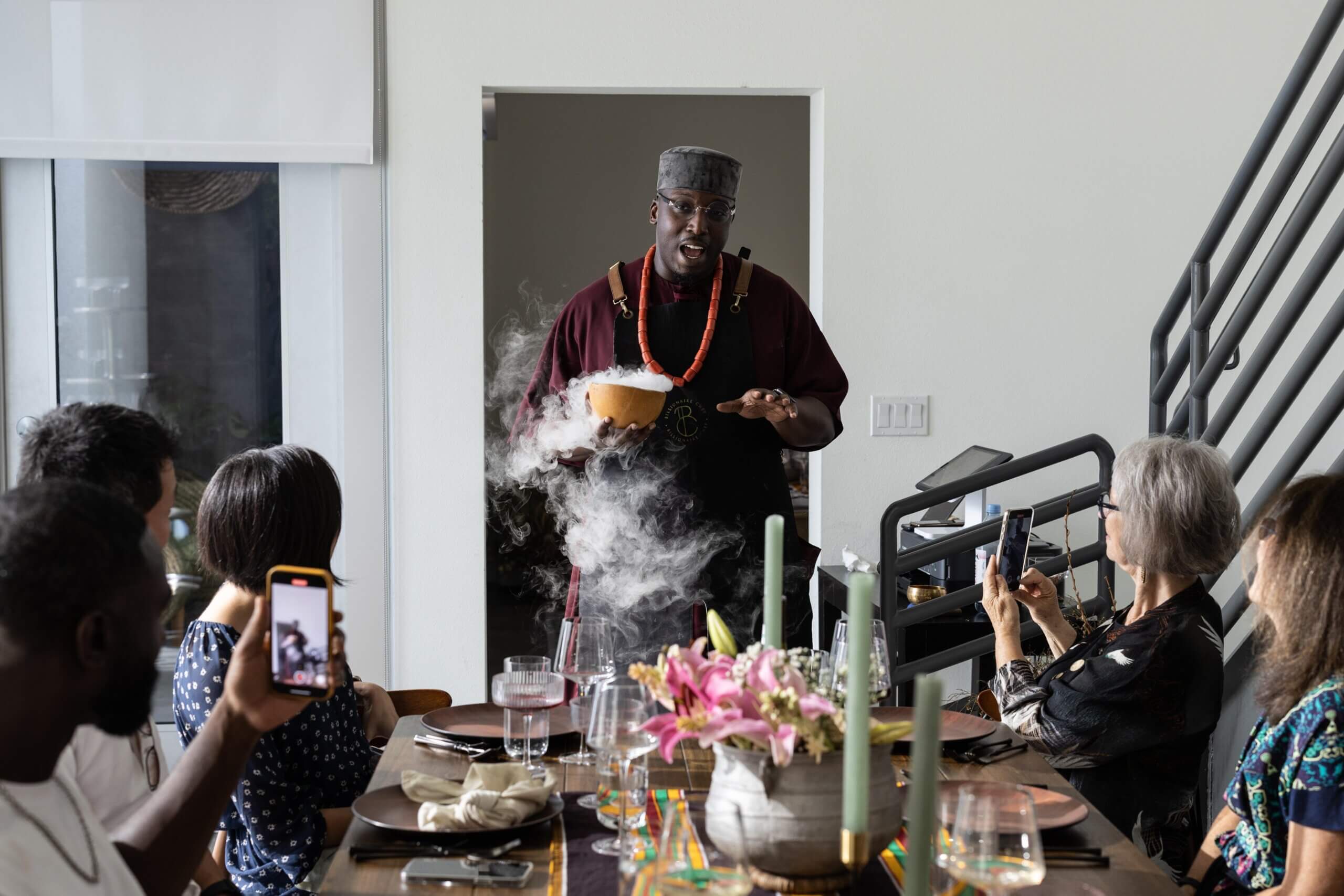
Today’s version of communal dining is rooted in a shared experience—with chefs and winemakers using this format to tell stories and share culture. Mosquito Supper Club, Ilé, Atomix, and The Donum Estate are all great examples of using the communal model to inspire, educate, and bring people together in a meaningful way.